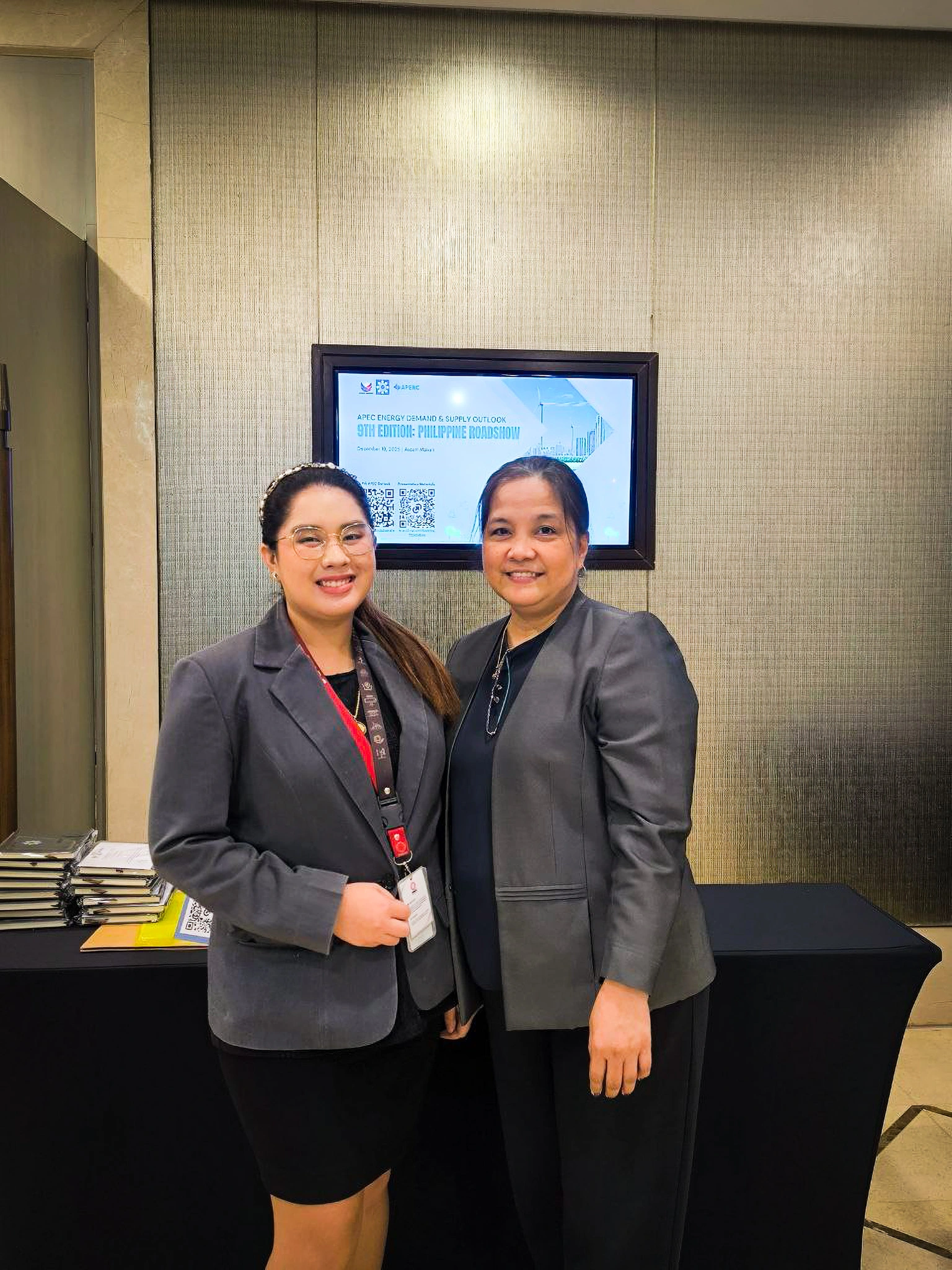
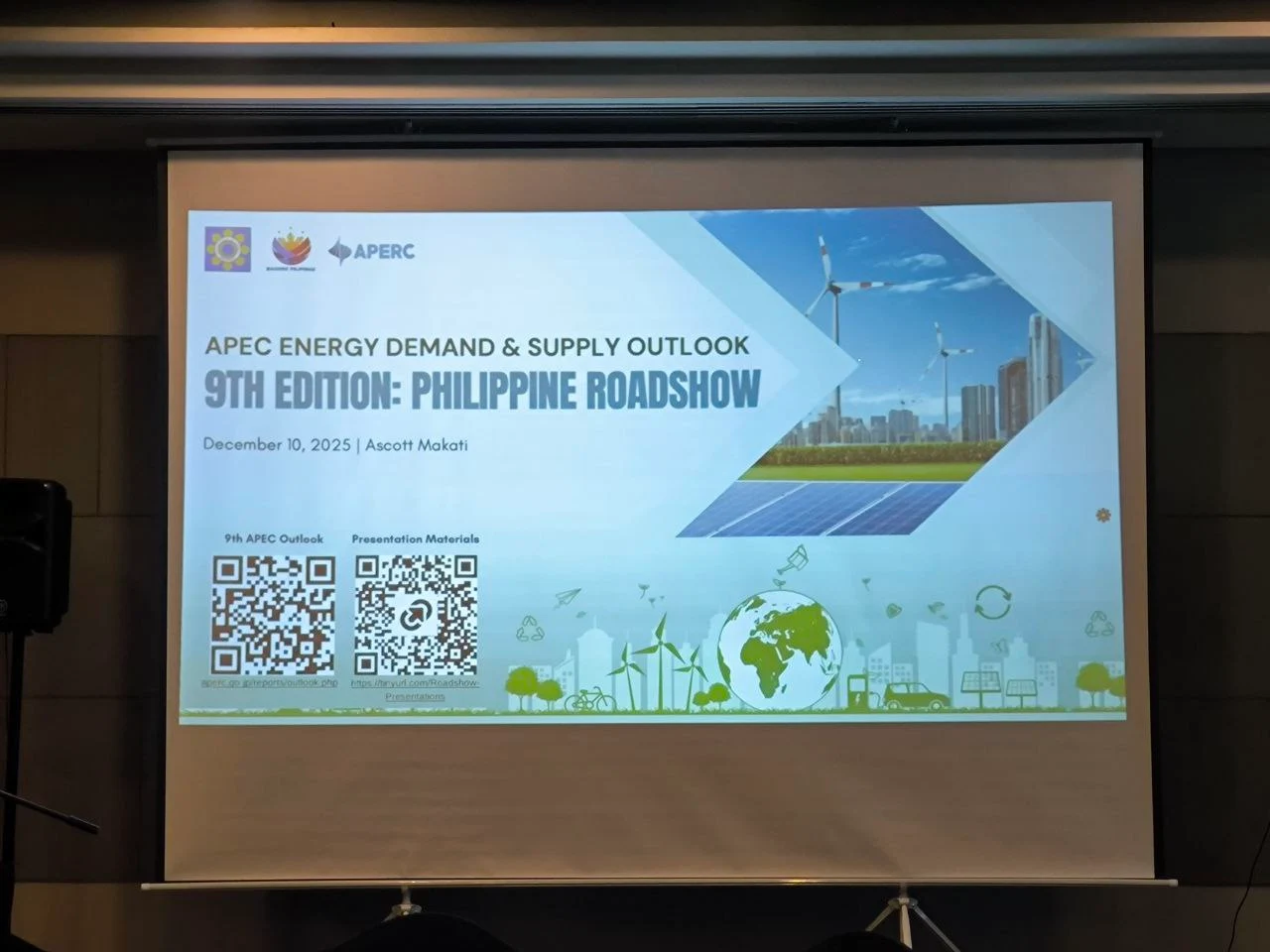
MAKATI CITY, Metro Manila – Underscoring its vital role in complementing the efforts of the private sector in the Philippines’ clean energy transition, the PNOC joined the Department of Energy’s (DOE) 9th APEC Energy Demand and Supply Outlook Philippine Roadshow on December 10, 2025.
In partnership with the Asia-Pacific Energy Research Centre (APERC), the DOE convened government, industry, and academic leaders to discuss and review the energy demand and supply outlook through 2060.
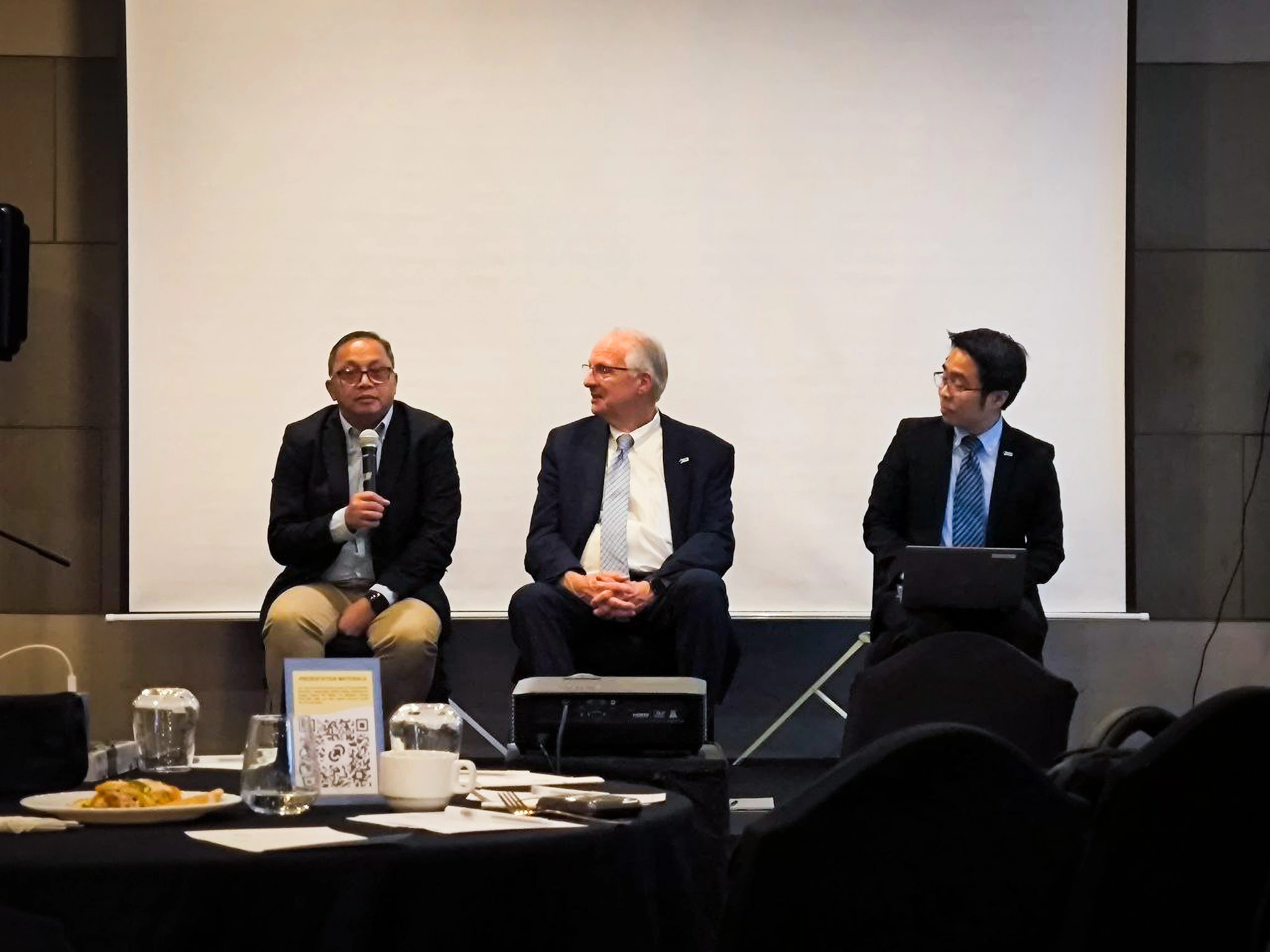
In his welcome remarks, DOE Undersecretary Felix William B. Fuentebella, highlighted the event’s collaborative and strategic nature.
“This gathering goes beyond the presentation of the report. It is a strategic dialogue that will help shape a sustainable, resilient, and inclusive energy trajectory, not only for our country, but for the entire Asia-Pacific region. It affords the collective efforts of APEC economies towards decarbonization,” said Usec. Fuentebella.
Dr. Samuel Matthew G. Dumlao, an APERC Researcher, laid out the data results for the Philippines, which showed expected growth in energy demand driven by the country’s increasing population and anticipated economic expansion.
Among the key results presented were the following findings:
- Power Sector’s Role: The power sector is expected to play a key role in meeting the additional energy demand, as the Philippines anticipates an increase in the electrification rate across all sectors.
- Fuel Mix Challenge: While a diverse mix of energy sources is ideal, the Philippines will have to rely heavily on natural gas to support its growing deployment of variable renewable energy (VRE) sources.
- Transport Electrification: The electrification of the transport sector will significantly help reduce import dependence. However, this shift may simultaneously reduce diversification due to an increased demand for natural gas to power the expanding electrified grid.
- Proactive Management: Proactive measures are required in the natural gas, transport, and power sectors to effectively manage rising energy demand, support electrification goals, and maintain an appropriate level of fuel diversification in the Philippines.
While the report generally aligned with the Philippines’ own energy projections, DOE Director Michael O. Sinocruz called for collaboration among its stakeholders and a proactive policy alignment. He emphasized that it is crucial for the country to examine its National Policy direction against these regional trends to position itself as a key player in the clean energy transition pathways.
Director Sinocruz also affirmed the DOE’s forward strategy: “Looking ahead, we accelerate the renewable energy deployment, advance electrification in carbon-intensive sectors, and modernize the grid while also ensuring that access to energy remains fair, secure, and affordable to all Filipinos.”
The APEC Energy Demand and Supply Outlook is a priority task under the APEC Energy Action Programme, providing essential analysis and policy insights on future energy demand and supply across APEC economies. The 9th edition of the report extended its projections to the year 2060.